Do you ever wonder if you’ve left an appliance on at home? Do you double-check if you’ve turned off all the lights? With smart homes, these worries will be a thing of the past.
An increasing number of people, smart home statistics show, enjoy the benefits of home automation devices—like easy and remote access to all their appliances and more.
And why shouldn’t they? Who wouldn’t want cutting-edge gadgets in their home doing most of the work? Or a security system ensuring that their family has the best protection possible?
However, before you say yes to a smart home, check all the facts and stats to confirm that home automation is the right choice for you.
Key Statistics:
- There are an estimated 350 million smart homes in the world.
- The US has approximately 94.7 million connected homes, surpassing earlier projections.
- The worldwide connected home market is projected to grow at a CAGR of 18.3% from 2023 to 2030.
- Google has overtaken Amazon in smart speaker market share as of 2023, with 31.7% compared to Amazon’s 29.4%.
- 92% of millennials would pay more for a connected home, with many willing to pay up to 30% more.
- Smart heating and cooling systems can now save smart home users up to 60% in energy use, with advancements in AI and machine learning improving efficiency.
- 75% of those surveyed want their smart home to have smart security systems, reflecting increased concerns about home safety.
- Smart home statistics in the USA show an estimated 48% of US broadband households experienced at least one data security issue in the past year.
- Approximately 35% of smart homes have at least one device vulnerable to cyber attacks that could compromise the entire home network.
- The cost to make a home “smart” now ranges from $1,500 to $5,000 on average, depending on the extent of automation and the quality of devices chosen.
- 69% of American households own at least one smart home device as of 2023.
- China has surpassed the US as the largest smart home market, accounting for approximately 35% of global consumer spending on smart home systems.
- The global smart home market is projected to reach $622.59 billion by 2030.
- 78% of Gen Z (ages 18-24) own smart home devices, indicating strong adoption among younger generations.
- The gender gap in smart home technology adoption is narrowing, with 53% male owners and 47% female owners as of 2023.
Global Home Automation Industry Statistics
In this section, we’ll look at the number of smart homes globally, as well as other interesting facts and statistics about smart homes throughout the world.
1. There are an estimated 420 million smart homes in the world as of 2024.

A smart home is defined as a modern home where appliances and devices can be controlled remotely by the owner, usually through a mobile app or voice commands.
Devices and smart home appliances can also be connected to other smart devices in the house, making smart home technology convenient and efficient.
Top 5 Smart Home Devices per Country (in percentages data for 2024)
| Device | USA | Canada | Australia |
|---|---|---|---|
| Smart Speakers | 45.2% | 36.8% | 34.5% |
| Smart Lighting | 41.3% | 38.7% | 35.9% |
| Smart Thermostats | 37.9% | 33.2% | 26.8% |
| Smart Security Systems | 34.6% | 30.4% | 29.1% |
| Smart Appliances | 32.5% | 28.9% | 26.3% |
2. China continues to lead in the number of smart homes.
As of 2024, China has further increased its lead, with an estimated 265 million smart homes and a penetration rate of about 48%.
The US follows with approximately 110 million smart homes and a penetration rate of 52.3%.
3. Europe has seen significant growth in smart home adoption.
By the end of 2023, there were an estimated 85 million smart homes in Europe.
The number of connected homes in Europe is now expected to reach 150 million by 2027, with Germany, the UK, and France continuing to lead the market.
The Nordic countries have also shown rapid adoption rates.
4. The global smart home market is projected to reach $785 billion by 2030.
The smart home market is growing at an incredibly fast pace, with a compound annual growth rate (CAGR) of 29.3% from 2024 to 2030.
This growth is driven by factors such as increasing awareness of energy efficiency, rising disposable incomes, the growing popularity of home automation systems, and the integration of AI and machine learning technologies.
5. Voice control has become a dominant interface in smart homes.

As of 2024, about 47% of smart home users primarily control their devices through voice commands, using platforms like Amazon Alexa, Google Assistant, Apple’s Siri, or newer AI-powered assistants.
This trend continues to grow, with voice control becoming a standard feature in most smart home setups.
Home Automation Market Statistics
Here, we’ll be looking at the smart homes market and the industry as a whole.
6. The global smart home market generated $157.3 billion in revenue in 2023.
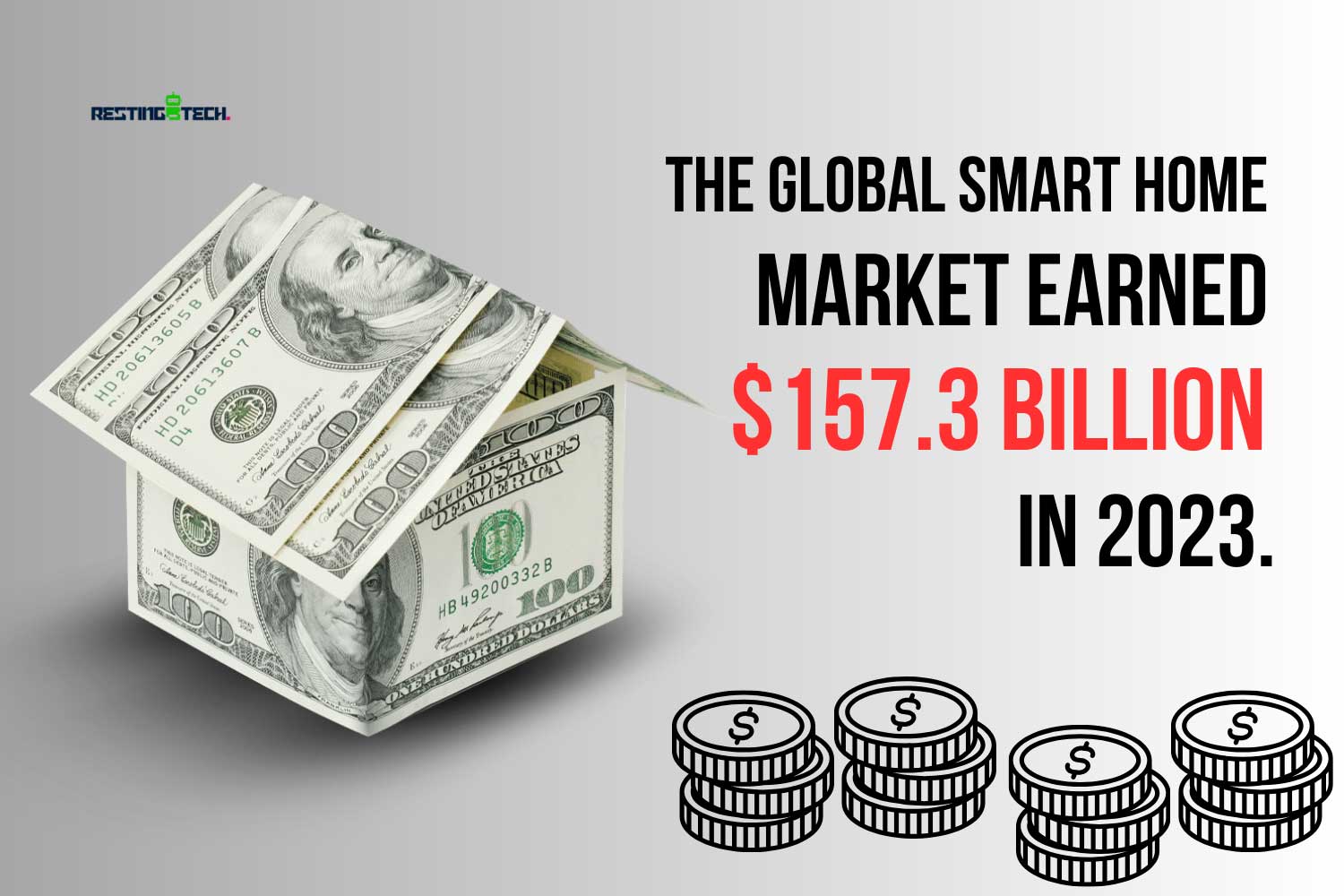
Future technological advances are expected to boost revenue in the smart home industry significantly. According to recent projections, the global smart home market is expected to grow at a CAGR of 29.3% from 2024 to 2030, potentially reaching $785 billion by 2030.
7. The worldwide connected home market is projected to grow at a CAGR of 20.5% from 2024 to 2030.
This growth rate has increased from previous projections, indicating accelerated expansion. Analysts note that the growing emphasis on energy efficiency, enhanced security features, advancements in artificial intelligence and machine learning, and the integration of 5G technology will continue to drive the market forward at an impressive rate.
8. China maintains its position as the largest market for smart home devices.

As of 2024, China accounts for approximately 38% of global consumer spending on smart home systems, followed by the United States at 30%. The European market, led by Germany and the UK, accounts for about 22% of global smart home revenue. Japan remains a significant player, with its smart home market valued at approximately $11.2 billion in 2023.
9. The smart speaker market landscape continues to evolve.
Smart Speaker Market Share (2024)
| Company | Market Share |
|---|---|
| 33.5% | |
| Amazon | 27.8% |
| Baidu | 16.9% |
| Alibaba | 13.4% |
| Apple | 6.2% |
| Others | 2.2% |

Google has further increased its lead in the smart speaker market, while Chinese companies Baidu and Alibaba have continued to gain market share, particularly in the Asian market.
10. Post-pandemic trends continue to influence smart home adoption.
While the immediate effects of the COVID-19 pandemic have subsided, the lasting impact on work-from-home trends and increased focus on home environments has continued to drive smart home adoption. There’s been a 35% increase in demand for smart home office solutions and air quality management systems since 2022.
11. Integration and interoperability have become critical factors in smart home technology.

The Matter standard, launched in late 2022, has gained significant traction. As of 2024, over 80% of new smart home devices are Matter-compatible, greatly improving cross-brand interoperability. This has led to a 25% increase in multi-brand smart home setups.
Smart Home Demographics
In this section, we’ll be looking at the types of people who have smart homes and make use of home automation.
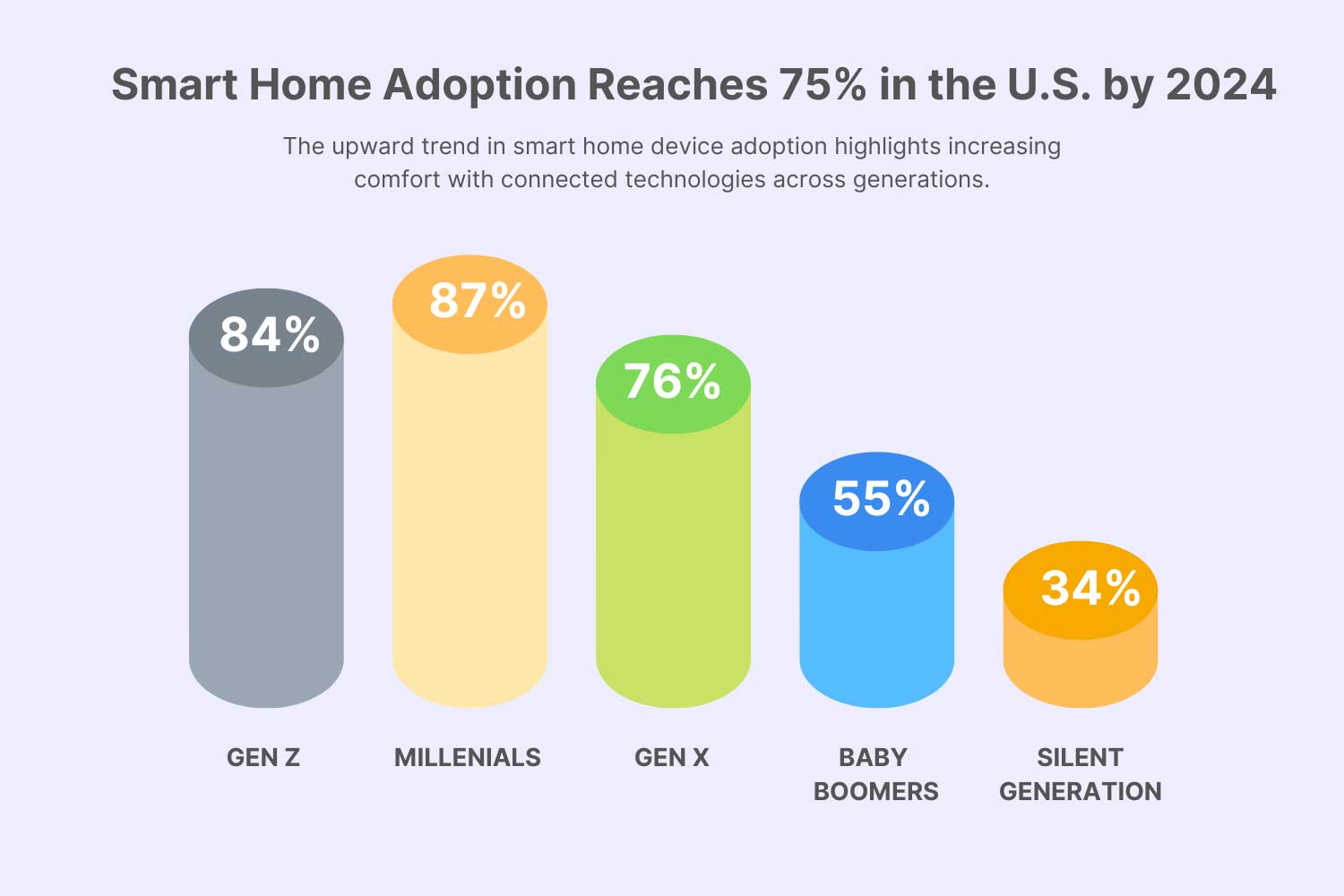
12. As of 2024, 75% of Americans own at least one smart home device.
This represents a significant increase from previous years. The breakdown by generation is as follows:
| Generation | Percentage Owning Smart Home Devices |
|---|---|
| Gen Z (18-26) | 84% |
| Millennials (27-42) | 87% |
| Gen X (43-58) | 76% |
| Baby Boomers (59-77) | 55% |
| Silent Generation (78+) | 34% |
13. 95% of millennials would pay more for a connected home.
Millennials continue to be enthusiastic about smart home technology. Recent surveys indicate that they are now willing to pay up to 35% more for a home with smart devices. Gen Z has caught up, with 94% saying they would pay more for a smart home.
14. 37.2 million baby boomers owned smart speakers in 2024.
Smart home technology adoption among older generations has grown significantly. Many products and services now cater specifically to the needs of the elderly, including:
- AI-powered voice assistants with personalized health monitoring
- Smart medication dispensers with biometric authentication
- Advanced fall detection devices with AI-driven predictive analytics
- Energy-efficient smart thermostats with learning capabilities
- Integrated smart home security systems with facial recognition
15. The gender gap in smart home technology adoption has nearly closed.
As of 2024:
- 51% of smart home technology owners are male
- 49% are female
This trend towards gender parity in smart home adoption has continued as expected.
16. Income levels still influence smart home adoption, but the gap is narrowing.

A 2024 survey revealed that smart home device ownership correlates with household income:
- 92% of households earning $150,000+ own smart home devices
- 83% of households earning $75,000-$149,999 own smart home devices
- 68% of households earning $30,000-$74,999 own smart home devices
- 52% of households earning less than $30,000 own smart home devices
The increase in affordable smart home options has contributed to higher adoption rates across all income levels.
17. Urban areas continue to lead in smart home adoption, but rural areas are catching up.
As of 2024:
- 79% of urban residents own smart home devices
- 74% of suburban residents own smart home devices
- 62% of rural residents own smart home devices
This narrowing disparity is attributed to improved rural internet connectivity and the increasing availability of DIY smart home solutions.
Advantages of Smart Homes
What are the benefits of smart homes? Here, we’ll be looking at the various advantages of using technology in your home.
18. 57% of the people who use smart devices say they save time.
Furthermore, 45% say that smart home tech helps them save money. Still, one of the top reasons why people invest in home automation is security, judging by the smart home security statistics. 72% of respondents say that their home feels safer after installing a smart security system.
19. Smart security systems cut down home insurance rates.
Some insurance companies will reduce premiums by almost 20% for homes that have home automated security systems installed. Considering that an annual home insurance cost in the US is around $1,083 on average, you might save about $200 a year.
20. Smart heating and cooling systems can save smart home users 50% in energy use.
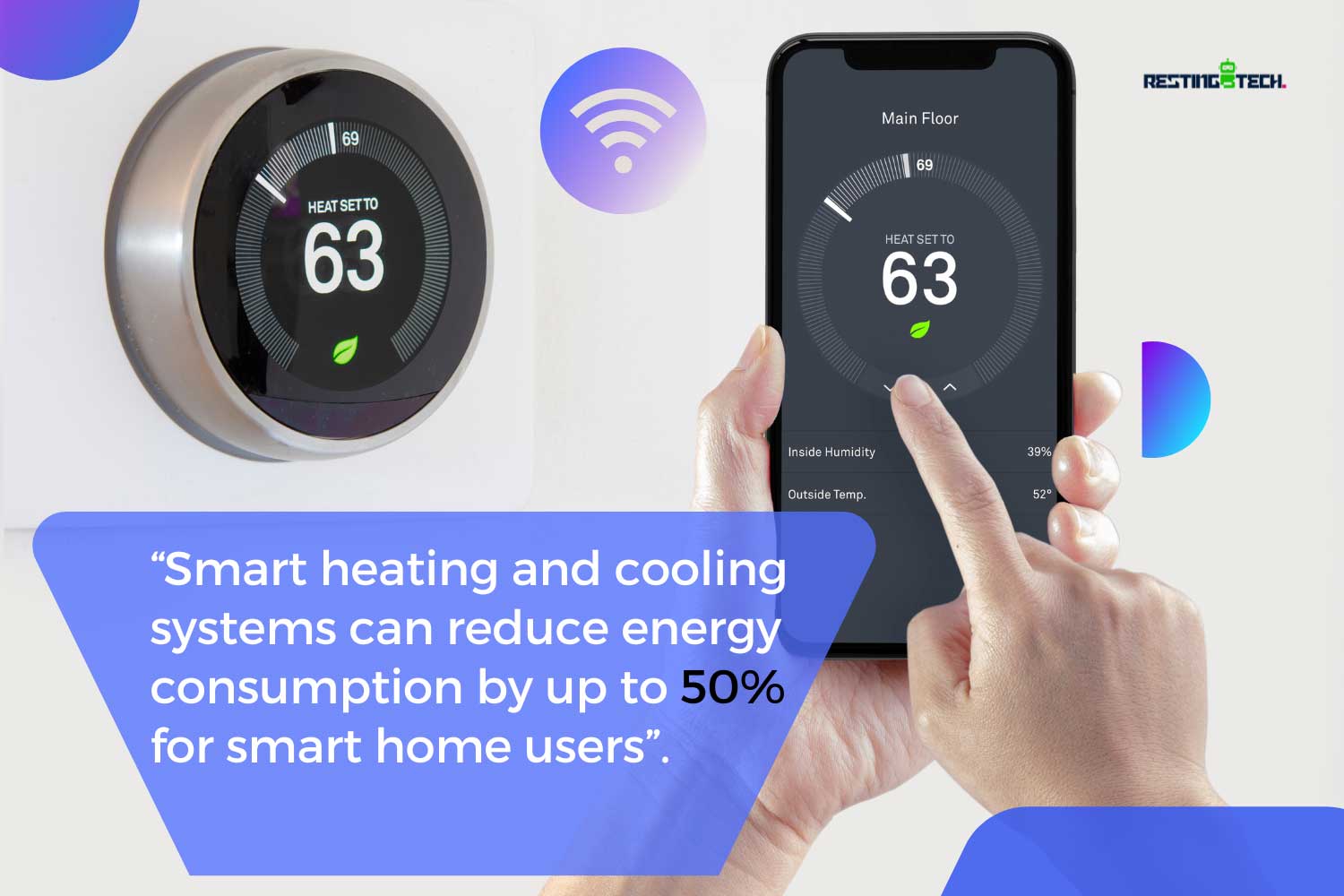
Lighting systems also contribute to energy savings, but it’s smart thermostats that are the most energy-efficient, smart home energy usage statistics indicate. In fact, some smart climate systems, like Nest, pay for themselves in less than two years.
21. 54% of homeowners believe that installing smart home systems will make the house sell faster.
Smart gadgets add to a property’s resale value, as well-informed homeowners know. What’s more, buyers prefer to have smart tech already installed before they buy the home.
81% of smart home device owners in the US are more likely to be interested in purchasing a connected home if the devices have been previously installed.
Smart Home Market Segments: Stats and Facts
In this section, we’ll be looking more closely at the smart home market segments.
22. According to home automation system statistics, 44% of smart homes include smart entertainment systems.

Smart TVs and speaker systems are the most popular type of smart home tech incorporated in homes. Next in line are intelligent security systems (31% of connected homes have these installed) and smart thermostats (30%).
23. 63% of those surveyed want their smart home to have smart security systems.
Another 63% stated that their preferred feature in a connected home would be smart thermostats and fans. And 58% want smart lighting systems in their home, the smart home installation statistics inform.
24. By 2023, home monitoring and security systems will have a 22.6% share of the smart-home market.
Smart speakers are projected to get a market share of 15.4%, while smart lighting systems are not far behind with 11.8% of the smart-home market.
25. Smart home users are expected to spend around $19.4 billion on security systems in 2020.
This amount is forecast to nearly double by 2024 to $35.6 billion spent on smart security systems, primarily cameras and smart locks, the two most popular products in this segment.
26. Looking at the devices in a smart home monitoring energy use, statistics indicate that this segment of the market is expected to generate $12.4 billion in three years’ time.
The global smart thermostat market is also projected to go up. Estimated at $1.36 billion in 2018, the market value of this segment should increase at a CAGR of 26% from 2019 to 2026.
27. The global smart kitchen market is expanding fast, smart home technology statistics indicate.
Valued at approximately $14.5 billion in 2019, the smart kitchen market is forecast to reach an incredible $43 billion by 2027. Not just bigger in market size, smart kitchens will become more intelligent, too.
From smart ovens and smart fridges that can scan food and even make orders for themselves, there are endless possibilities of what smart home appliances in the kitchen can do.
Smart Home Breach Statistics
Of course, by introducing technology into the home, you may be opening yourself up to a whole new type of home invasion.
28. 40.8% of smart homes have at least one device vulnerable to cyber attacks that put the whole home in danger.
Despite numerous warnings about protecting your smart home from hackers and security breaches, more than 69% are still at risk due to weak access credentials, and 31.4% are in danger as a result of unpatched software vulnerabilities. People will have a number of smart home devices per household and not protect them… this needs to change.
29. Printers are the most vulnerable devices in the home.
Along with network-attached storage devices and security cameras, these make up the three most easily hacked devices in the US, Canada, and Australia. Analysis of smart home hacking statistics indicates that due to the rising popularity of content streaming, media boxes will be the next big target for hackers.
30. An estimated 35% of US broadband households dealt with a data security issue last year.

The reality and seriousness of concerns regarding the safety of smart homes have convinced one in four consumers in six of the biggest markets not to purchase smart devices for the home.
Extra Interesting Facts About the Smart Home Industry
Here, we’ll be exploring some miscellaneous stats and facts about the smart home industry.
31. 56% of US adults feel comfortable with smart home technology.
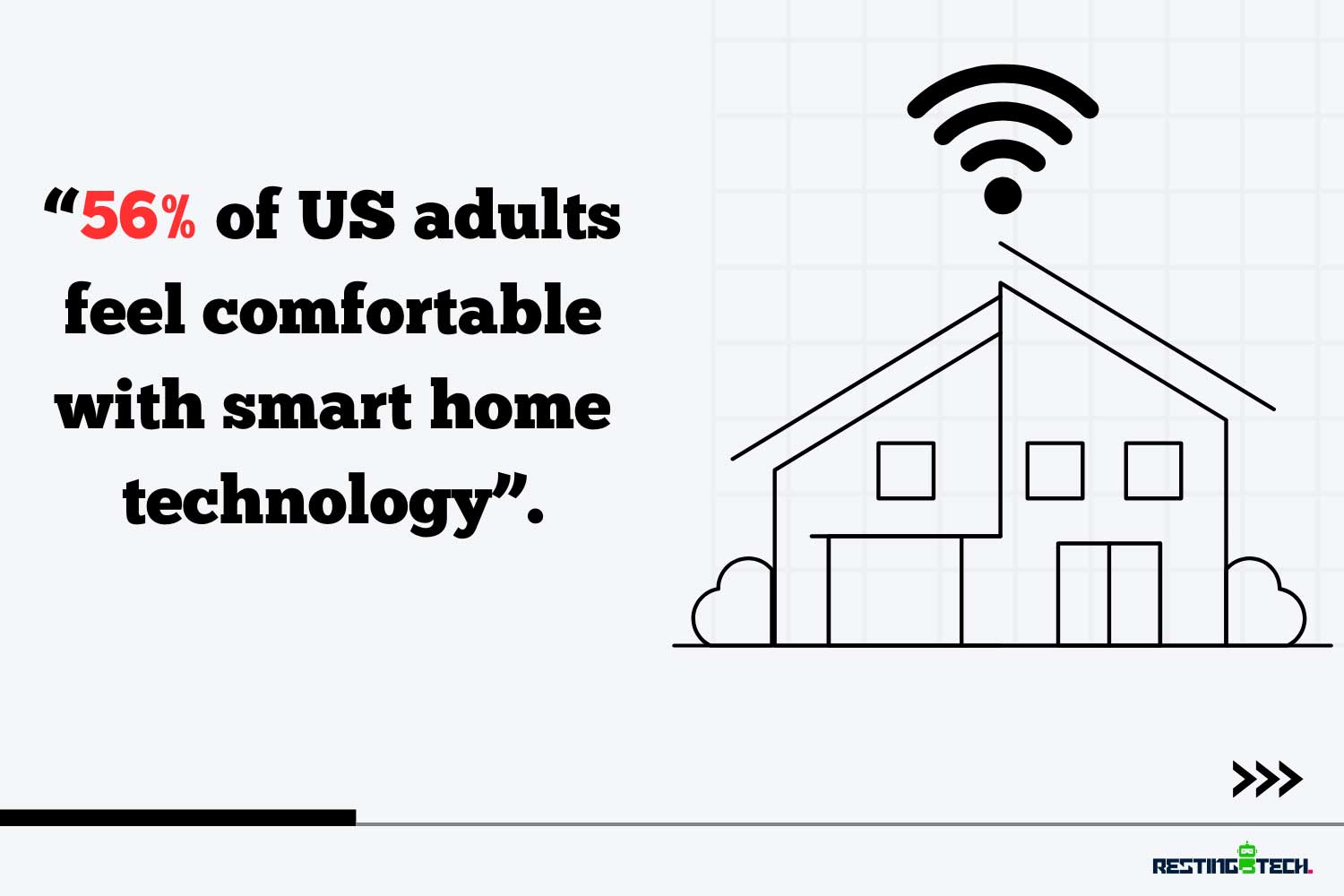
What’s more, 61% of respondents who have a smart product stated they were so satisfied with it that they would buy another. Less than one in five, however, think that having one smart home device is enough.
In coming years, we’ll likely see the popularity of smart homes increase as people become more comfortable with having the technology available to them in their homes.
32. Trust in smart home products seems to go to different extremes.
While one in five survey respondents said they would trust Alexa to babysit their kids, smart home statistics indicate that nearly 2 in 3 respondents believe that their smart devices are being used by businesses and the government to spy on them.
33. It costs people between $970 and $3,310 to make their home a smart one.
Contrary to what people think, putting in a smart speaker or smart lock does not make a smart home. Going for the whole shebang—i.e., installing home control systems, smart lights, and energy and entertainment systems—can run up a big bill. As seen by the smart home statistics for 2020, Americans pay an average of $98.36 for their connected homes.
34. Smart devices are expected to become even smarter in the future.
Although AI technology already uses machine learning to adjust behavior to the owner’s habits, we should see more of this in the future as devices start to learn, think, and even make decisions.
35. 5G technology is expected to revolutionize IoT services.

The IoT is what makes smart homes run, and with 5G technology, they will run even faster and offer more possibilities for consumers.
If the smart home technology facts are to be trusted, 5G technology is projected to have 2.6 billion subscribers by 2025, putting the value of the annual global IoT market at a staggering $3.9–$11.1 trillion by 2025.
Bottom Line
Smart homes are comfortable, convenient, and safe—and let’s be honest, they look pretty cool too. Despite the numerous advantages of owning a smart home, the best part is probably the endless potential this technology has to offer.
With the smart home statistics leading up to 2022, growth projections, and technological advances painting an exciting future, the sky’s the limit for connected homes.
Who knows? Maybe a robotic maid won’t just live in our imaginations but become an integral part of our state-of-the-art, machine-operated homes.
Sources:
Allied Market Research, Android Central, Avast, Business Insider, CITyFiED, Datafloq, DigitalTrends, Forbes, Frontier, HIVE, HomeTechHacker, Investopedia, iPropertyManagement, Livewire, Marketing Charts, Medium, Mordor Intelligence, Real Estate Express, S&P Global, Security Sales & Integration, Security Sales & Integration, Security Sales & Integration, Statista, Statista, Statista, Statista, Statista, Statista, Statista, Statista, The Ambient, Time, TiO Home, VentureBeat, World Economic Forum, ZDNet.