Did you know that Generation Z now makes up nearly 30% of the global population?
As of 2024, this tech-savvy cohort represents about 28% of the world’s population, translating to over 2.2 billion individuals. Born between 1997 and 2012, Gen Z is rapidly becoming a dominant force in society, culture, and the economy.
But who exactly are these digital natives, and how are they shaping our world? From their diverse backgrounds to their unique consumer habits and workplace expectations, Gen Z is redefining norms across various aspects of life.
Their influence extends far beyond their own purchasing power, affecting family decisions and pushing businesses to adapt to new values and preferences.
In this article, we’ll dive into the latest Generation Z statistics for 2025. We’ll explore their demographics, digital habits, educational pursuits, and workplace expectations.
By understanding this generation, we can better prepare for the changes they’re bringing to our society and economy. Let’s uncover the facts and figures that paint a vivid picture of the world’s largest generational cohort.
Key Stats:
- 30% of the global population is now Generation Z, making them the largest generational cohort alive.
- 52% of Gen Z in the US identifies as non-white, making them the most diverse generation yet.
- 99% of Gen Z worldwide owns a smartphone, with near-universal levels globally.
- 43% of Gen Z takes action after seeing a sponsored ad, reshaping digital marketing strategies.
- 75% of Gen Z teens spend three or more hours per day watching video content.
- Gen Z represents 42% of US consumers with a collective purchasing power of $360 billion.
- 46% of Gen Z actively participates in product reviews, changing brand engagement dynamics.
- Only 25% of Gen Z are willing to share personal information with brands, highlighting privacy concerns.
- 62% of Gen Z prefers to purchase from eco-friendly and socially responsible brands.
- Gen Z influences 77% of family decisions on food and household products.
- By 2025, 33% of the global workforce will be Gen Z.
- 90% of Gen Z considers workplace diversity crucial when choosing an employer.
- 75% of Gen Z ranks health insurance as a top job requirement.
- 95% of Gen Z consider technology a deal-breaker in job choice.
- 70% of Gen Z checks YouTube daily, while 75% use TikTok daily, making it their favorite platform.
Generation Z Statistics Rundown
1. Gen Z Now Makes Up Nearly 30% of the Global Population
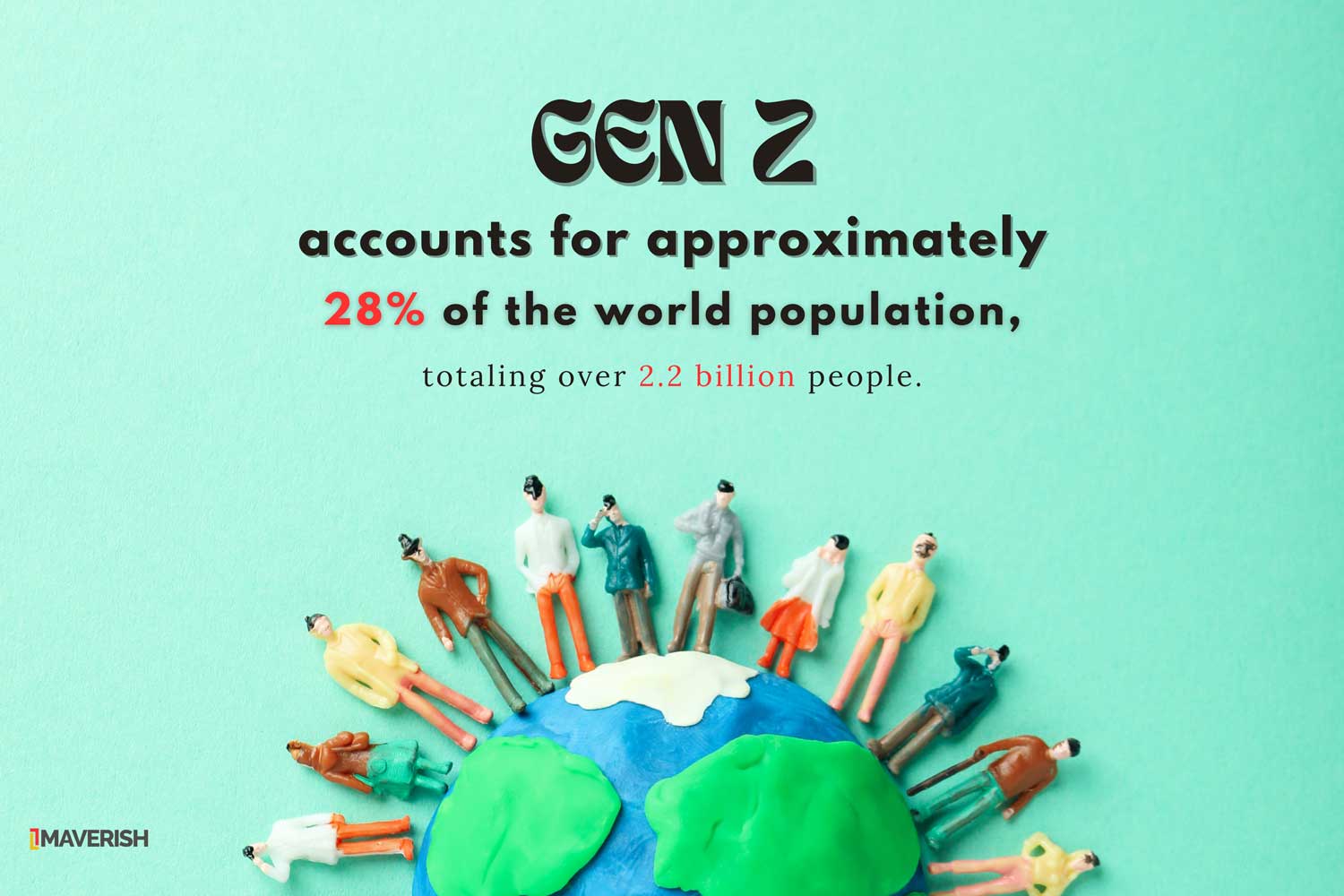
As of 2024, Generation Z (born between 1997 and 2012) represents approximately 28% of the world’s population. This translates to over 2.2 billion Gen Zers worldwide, making them the largest generational cohort alive.
What sets Gen Z apart is their status as digital natives – the first generation to grow up fully immersed in technology from birth. This technological fluency shapes their worldview and expectations, particularly regarding the seamlessness and efficiency of digital experiences.
2. Over 50% of Gen Z in the US Identifies as Non-White, Making Them the Most Diverse Generation Yet
The racial and ethnic makeup of Generation Z in the United States showcases unprecedented diversity:
- 52% of Gen Z identifies as non-white.
- 25% identifies as Hispanic (compared to 17% of Millennials).
- 15% identifies as Black (similar to Millennials and Gen X).
- 7% identifies as Asian (up from 4% of Millennials).
This diversity is expected to increase, with the US Census Bureau projecting that by 2026, the majority of Gen Z will be non-white. This demographic shift has profound implications for marketing, workplace culture, and social dynamics in the coming years.
3. Smartphone Ownership Among Gen Z Reaches Near-Universal Levels Globally
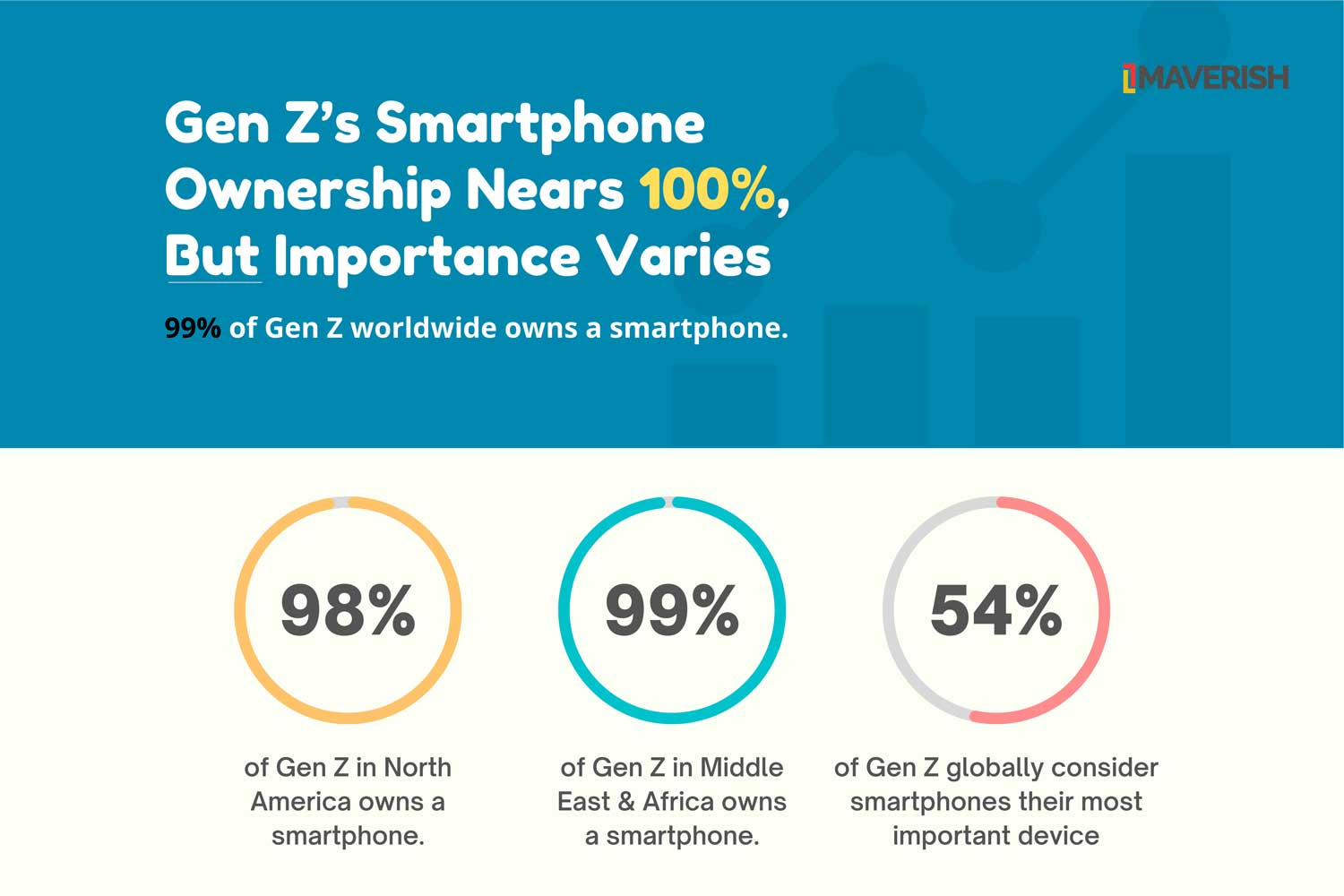
The prevalence of smartphone ownership among Generation Z has reached staggering levels:
- 99% of Gen Z worldwide owns a smartphone.
- In North America, 98% of Gen Z has a smartphone.
- In the Middle East and Africa, 99% own smartphones, with 81% considering them their primary internet device.
However, it’s noteworthy that only 54% of Gen Z globally consider smartphones their most important device, indicating a nuanced relationship with technology that marketers and employers should be aware of.
4. Nearly Half of Gen Z Takes Action on Sponsored Ads, Reshaping Digital Marketing
Gen Z’s engagement with digital advertising shows promising trends for marketers:
- 43% of Gen Z takes action after seeing a sponsored ad.
- 27% immediately clicks on an ad after viewing it.
- 32% makes an online purchase following ad exposure.
- 22% makes an offline purchase influenced by digital ads.
Importantly, 62% of Gen Z is likely to click on ads and purchase recommended products, highlighting the effectiveness of targeted digital marketing for this demographic.
5. Gen Z’s Daily Screen Time Continues to Rise, with Video Content Dominating
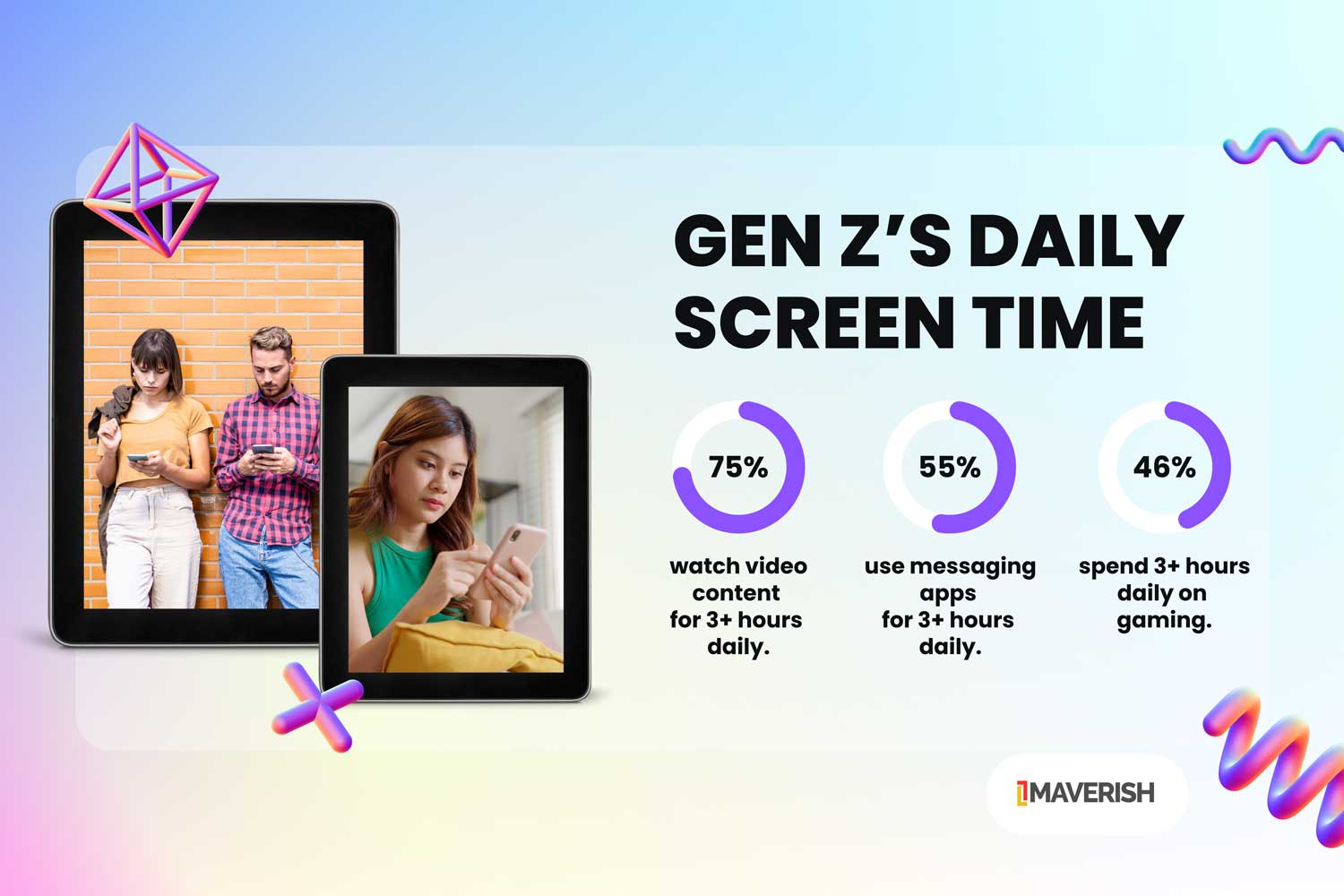
Recent studies show that Gen Z’s screen time habits are evolving:
- 75% of Gen Z teens spend three or more hours per day watching video content.
- 55% use messaging apps for over three hours daily.
- 46% spend three or more hours daily playing games.
This increased screen time is facilitated by advancements in mobile technology, including larger displays and improved battery life. For marketers and content creators, this trend underscores the importance of video-centric strategies and mobile-first approaches when targeting Gen Z.
6. Gen Z Now Accounts for Over 40% of US Consumers, Wielding $360 Billion in Buying Power
As of 2024, Generation Z has solidified its position as a dominant force in the US consumer market:
- Gen Z now represents 42% of US consumers.
- Their collective purchasing power has grown to an estimated $360 billion.
This significant market share makes Gen Z an essential target for marketers across industries. Their influence extends beyond direct purchases, as they often impact family buying decisions and shape broader consumer trends. Businesses that fail to engage with this demographic risk losing substantial market share in the coming years.
7. Nearly Half of Gen Z Actively Participates in Product Reviews, Reshaping Brand Engagement

Gen Z’s approach to brand interaction is markedly different from previous generations:
- 46% of Gen Zers willingly participate in product reviews
- 44% engage with brand-sponsored online games or campaigns
This high level of engagement reflects Gen Z’s desire to have their voices heard and to actively shape the brands they interact with. For businesses, this presents both an opportunity and a challenge:
- Opportunity: Gain valuable insights and build brand loyalty through active engagement
- Challenge: Manage and respond to a higher volume of customer feedback across multiple platforms
8. Gen Z Values Privacy: Only 1 in 4 Willingly Share Personal Information with Brands
Despite their digital nativity, Gen Z shows a strong awareness of data privacy:
- Only 25% are willing to share private information with brands
- This cautiousness is partly attributed to high-profile data breaches and misuse cases
For marketers, this trend necessitates a shift towards:
- Transparent data practices.
- Value-driven data exchange.
- Enhanced data security measures.
Brands that prioritize privacy and clearly communicate the benefits of data sharing are more likely to gain Gen Z’s trust and engagement.
9. Over 60% of Gen Z Prioritizes Eco-Friendly and Socially Responsible Brands
Environmental and social consciousness is a defining characteristic of Gen Z:
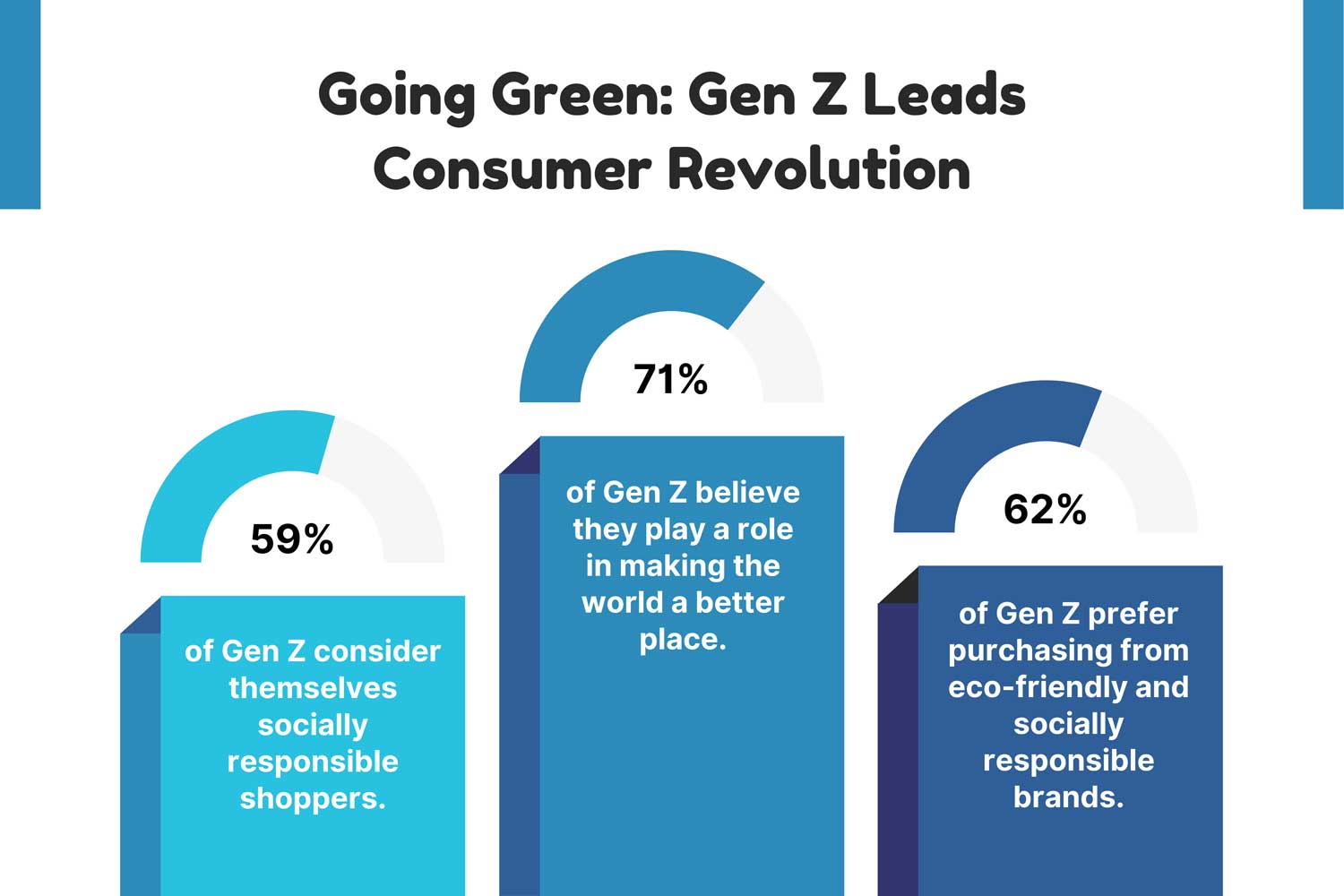
- 62% prefer to purchase from eco-friendly and socially responsible brands.
- 71% say they are conscious of their role in making the world a better place.
- 59% consider themselves socially responsible consumers.
This shift towards conscious consumerism is reshaping industries, pushing companies to:
- Adopt sustainable practices.
- Increase transparency in supply chains.
- Engage in meaningful social causes.
Brands that authentically align with these values are more likely to resonate with Gen Z consumers.
10. Gen Z Influences Over 75% of Family Purchasing Decisions on Food and Household Products
The impact of Gen Z extends beyond their direct purchasing power:
- 77% of Gen Zers influence family decisions on food and household products.
- This influence spans across various categories, including technology and entertainment choices.
This trend highlights the need for marketers to consider Gen Z preferences even when targeting older demographics. Strategies that appeal to Gen Z’s values and interests are likely to have a ripple effect on household purchasing patterns.
Generation Z in the Workplace Statistics
11. 33% of the Global Workforce Will Be Gen Z by 2025
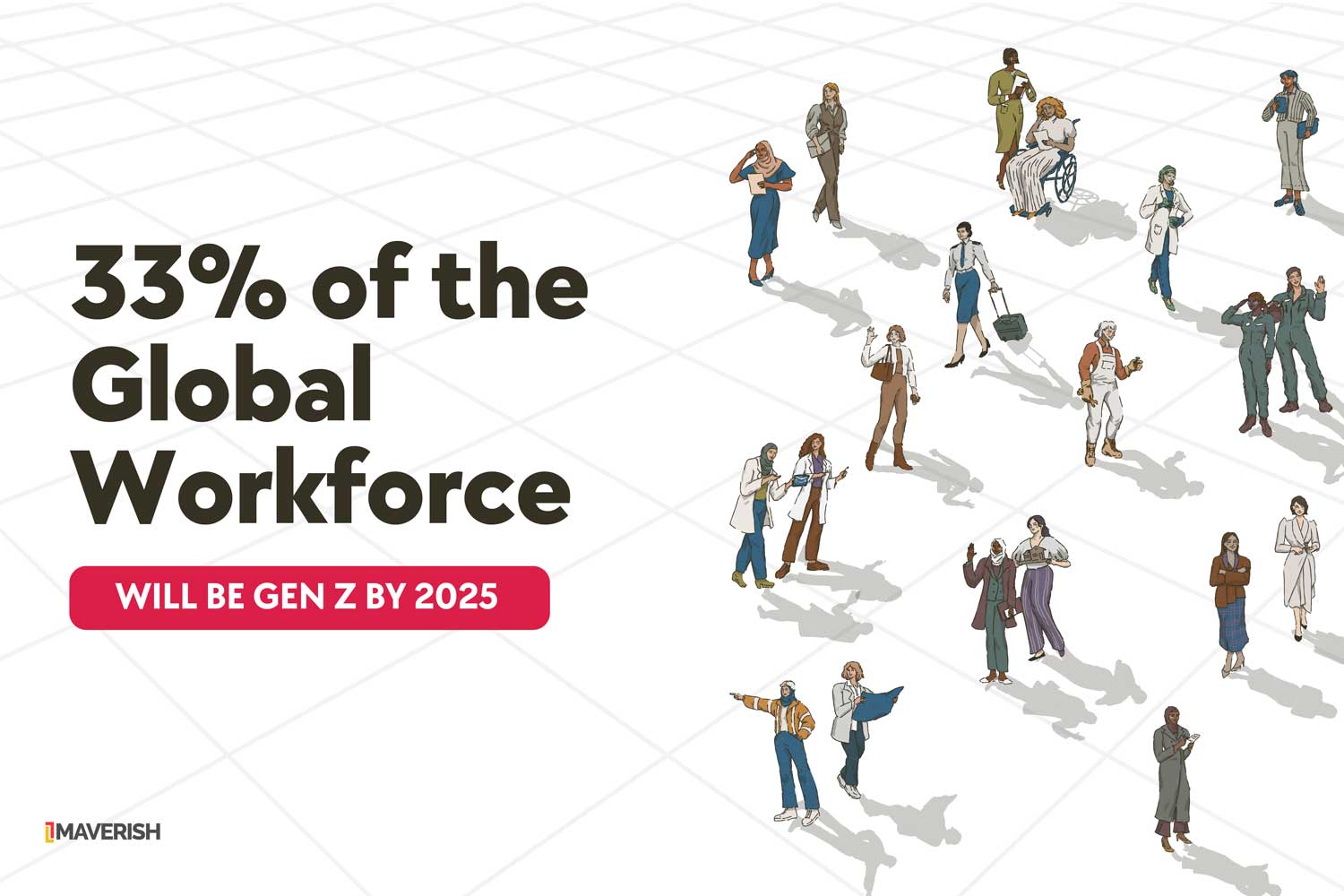
Generation Z, born between 1997 and 2012, is rapidly entering the job market. By 2025, they’ll make up a third of workers worldwide. This is a big jump from earlier predictions, showing just how quickly this young generation is joining the workforce.
As digital natives, Gen Z brings unique skills to the table. They’re naturally comfortable with technology, which is a huge advantage in our increasingly digital world. This generation is also incredibly adaptable. They’re likely to have about 20 jobs across 5-7 careers in their lifetime and move homes 12-15 times. This flexibility makes them valuable in a fast-changing job market.
For employers, this means preparing for a workforce that values flexibility, continuous learning, and tech-savvy environments. Companies that can offer these elements will be more attractive to Gen Z talent.
12. 50% of Gen Z Grows Up with a College-Educated Parent
Half of Gen Z kids have at least one parent with a bachelor’s degree or higher. This is a big increase from previous generations:
- 50% for Gen Z
- 43% for Millennials
- 36% for Gen X
This educational background is pushing Gen Z to become the most educated generation in history. Right now, 57% of Gen Z aged 18 to 21 are in college, which is more than previous generations at the same age.
What does this mean for the workplace? Gen Z often enters with high expectations for learning and development. They’re looking for jobs that offer opportunities to grow and gain new skills. Employers who provide robust training and development programs will be more appealing to this education-focused generation.
13. 90% of Gen Z Considers Workplace Diversity Crucial
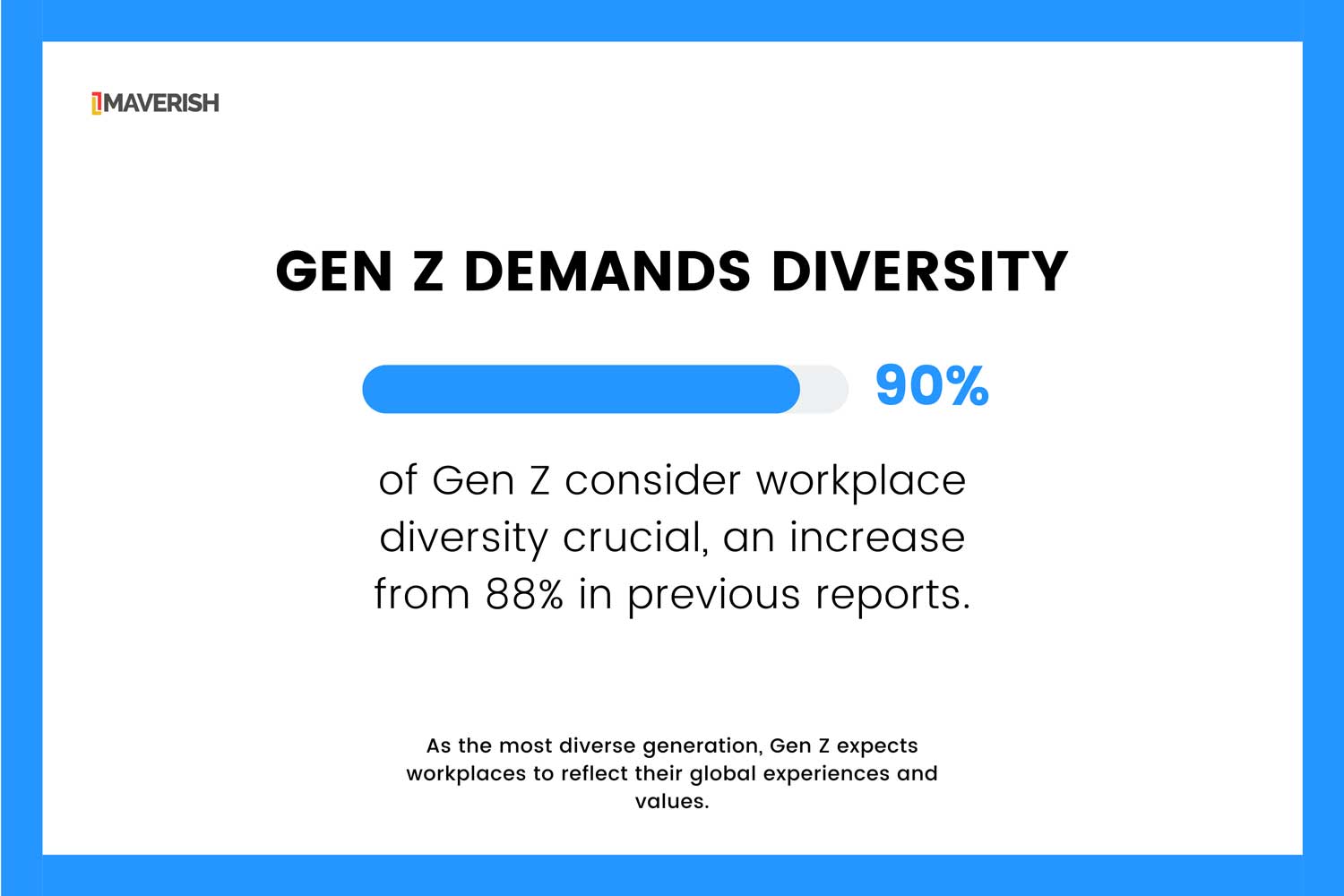
Diversity isn’t just a buzzword for Gen Z – it’s a must-have. A whopping 90% say it’s important in the workplace, up from 88% in previous reports. This isn’t surprising when you consider that Gen Z is the most diverse generation in history.
Growing up with social media and global connections, Gen Z has been exposed to a wide range of perspectives and cultures. They want their workplaces to reflect this diversity. For employers, this means:
- Making diversity and inclusion a top priority
- Implementing inclusive hiring practices
- Creating a workplace culture that celebrates differences
Companies that can create truly diverse and inclusive environments will have a big advantage in attracting and retaining Gen Z talent.
14. 75% of Gen Z Ranks Health Insurance as a Top Job Requirement
Health and wellbeing are big priorities for Gen Z. Three-quarters of them list health insurance as a must-have when looking for a job. This is up from 70% in previous studies. Other important factors for Gen Z job seekers include:
- Competitive salary (68%)
- A boss they can respect and rely on (65%)
- Work-life balance (62%)
- Opportunities for career growth (60%)
This focus on health benefits shows that Gen Z is thinking seriously about their overall wellbeing, not just their paycheck. Employers who offer comprehensive health packages and promote employee wellness are likely to be more attractive to this generation.
15. 95% of Gen Z Consider Technology a Deal-Breaker in Job Choice
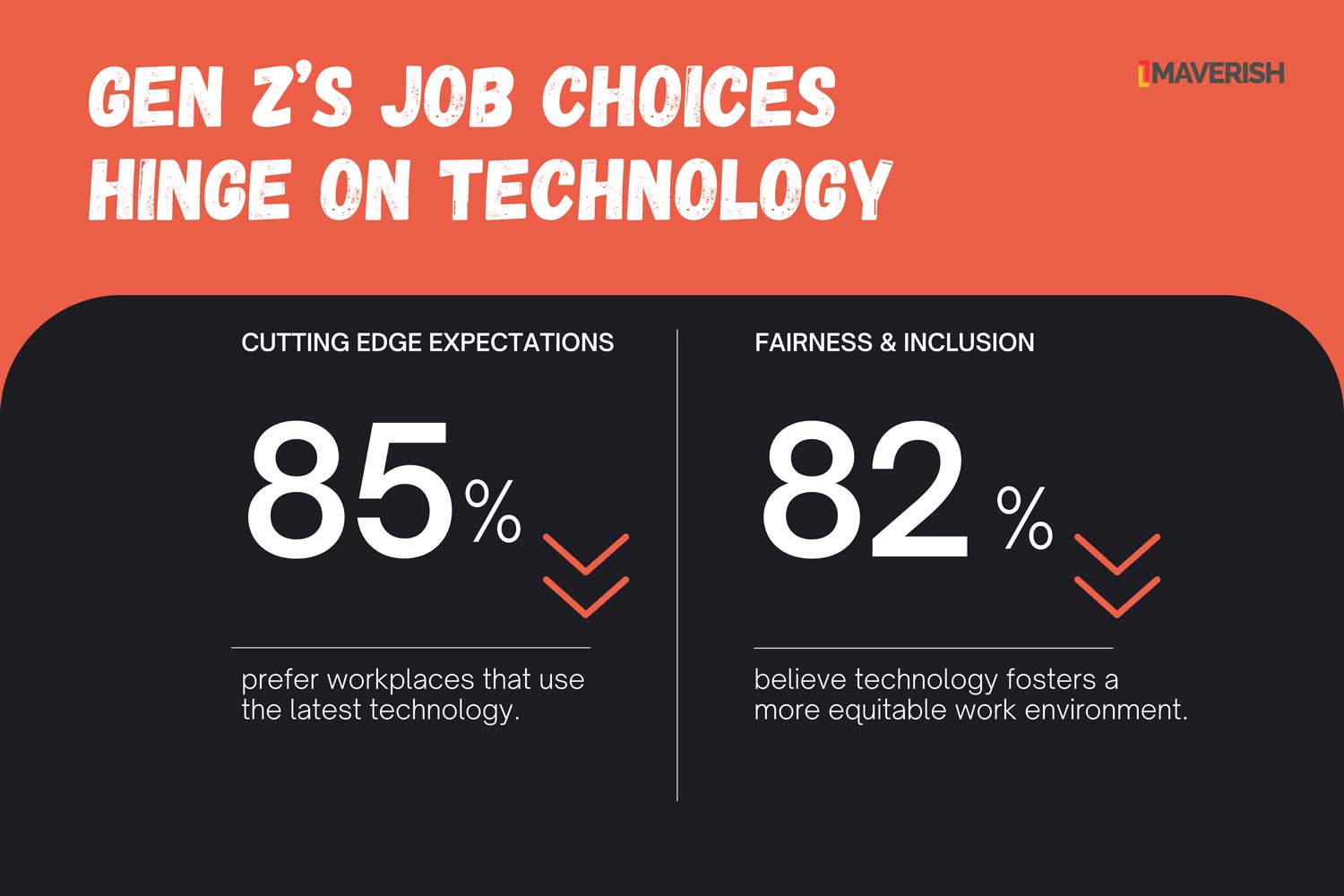
Technology isn’t just important to Gen Z – it’s essential. An overwhelming 95% say it’s a decisive factor when choosing a job, up from 91% previously. Additionally:
- 85% want to work with cutting-edge technology
- 82% believe technology creates a fairer work environment
For employers, this means showcasing their tech capabilities is crucial when recruiting Gen Z. It’s not just about having the latest gadgets, though. Gen Z wants to see how technology is integrated into the workplace to improve efficiency, collaboration, and fairness.
16. 82% of Gen Z are Willing to Be Tech Mentors at Work
Despite being the youngest in the workforce, Gen Z is confident in their tech skills. As of 2024, 82% say they’re willing to act as tech mentors to their colleagues, up from 77% in previous years.
However, there’s a flip side to this tech confidence. About 55% of Gen Z workers feel less sure about their soft skills. This creates an interesting opportunity for workplaces. By setting up mentoring programs, companies can:
- Let Gen Z share their tech knowledge
- Help Gen Z develop crucial soft skills like communication and leadership
- Foster better understanding between different generations at work
This kind of program can lead to a more balanced, skilled workforce overall.
17. 65% of Gen Z Prioritize Work-Life Balance Over High Salaries
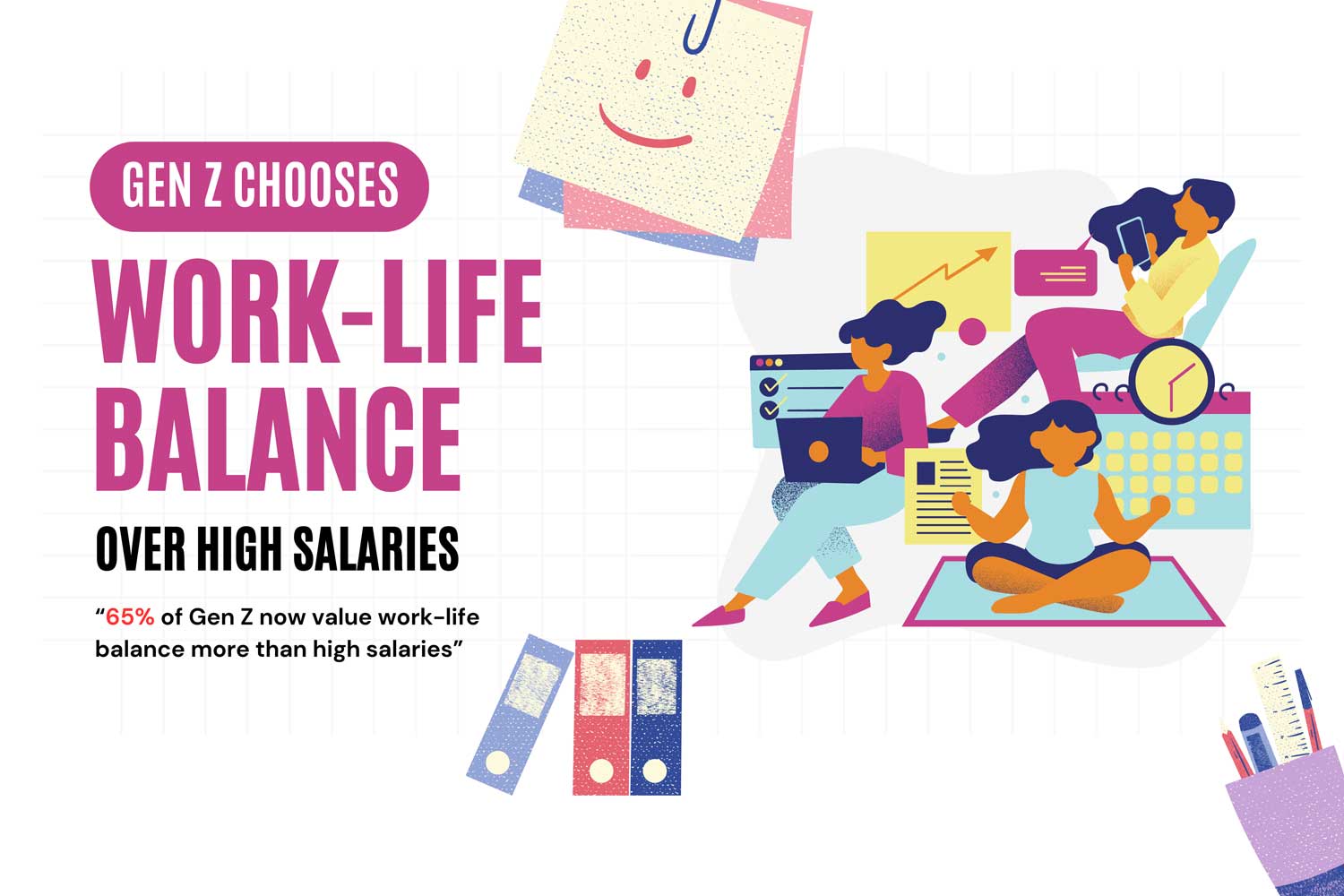
The way Gen Z thinks about work is changing. Nearly two-thirds now say that having a good work-life balance is more important than earning a high salary. This is a big jump from the 58% reported in earlier studies.
This doesn’t mean Gen Z doesn’t care about money. They still have financial goals like buying homes and starting families. But they’re looking for ways to achieve these goals without sacrificing their personal lives. This has led to:
- More interest in flexible work arrangements
- A preference for remote work options
- Less interest in traditional 9-to-5 jobs
For employers, this means rethinking how work gets done. Offering flexible hours, remote work options, and good vacation policies could make a company much more attractive to Gen Z talent. It’s about creating an environment where people can do great work without burning out.
Companies that can adapt to these preferences are likely to be more successful in attracting and keeping Gen Z employees. Remember, for Gen Z, success isn’t just about a big paycheck – it’s about having a fulfilling career and a satisfying personal life too.
Generation Z Social Media Statistics
18. 99% of Gen Z Discovers New Products Through Social Media
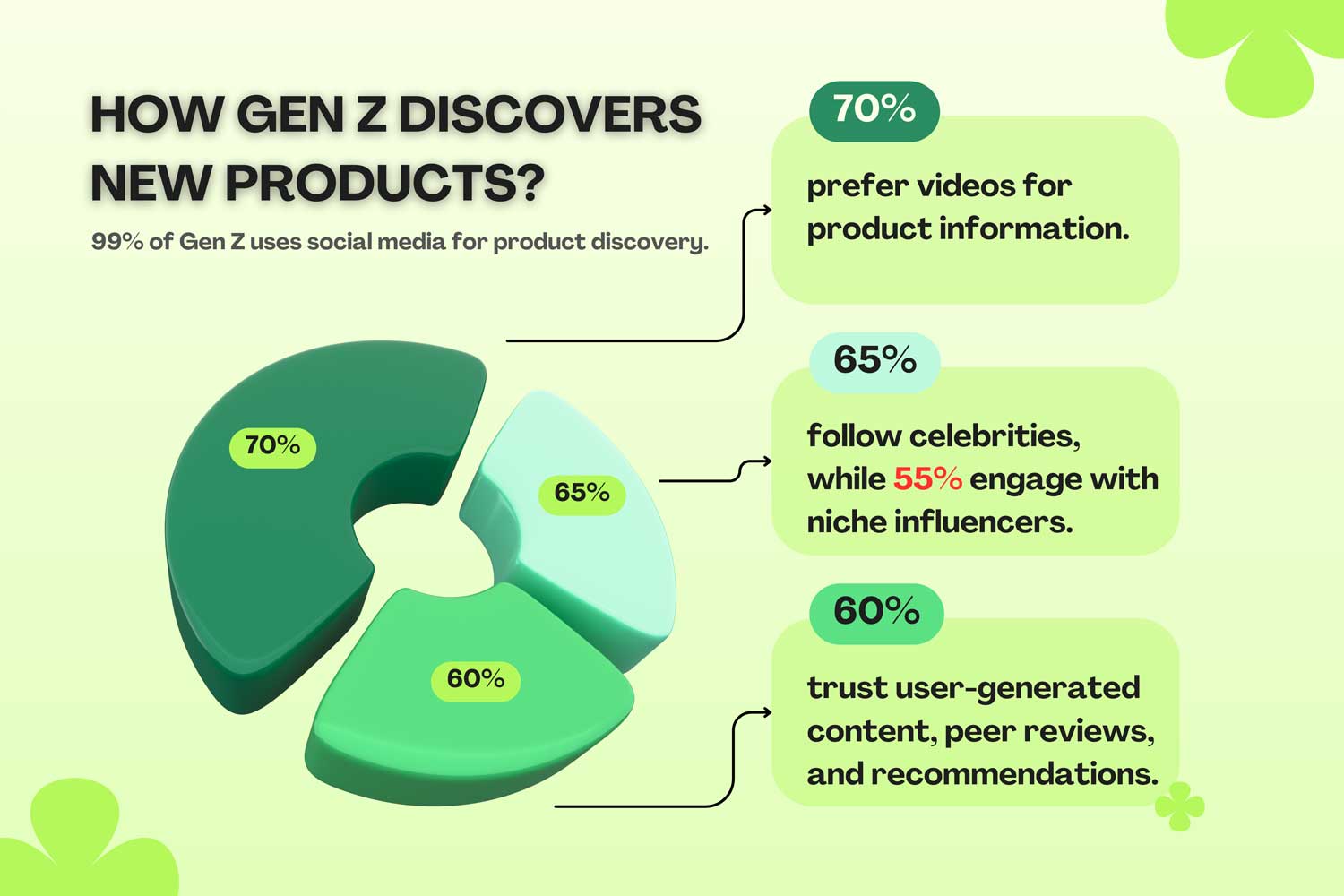
In 2024, nearly all Gen Z consumers are turning to social media for product discovery. This is a slight increase from 97% in previous years, showing the growing importance of social platforms in shaping Gen Z’s buying decisions.
Key trends in how Gen Z uses social media for product discovery:
- 70% prefer video content for product information. This highlights the need for brands to create engaging video content to capture Gen Z’s attention.
- 60% follow celebrities and 55% follow niche influencers. Influencer marketing remains a powerful tool for reaching this generation.
- 65% value user-generated content, including peer reviews and recommendations. This shows the importance of authenticity and real user experiences in Gen Z’s decision-making process.
For marketers, this means creating a multi-platform strategy with a focus on video content, influencer partnerships, and encouraging user-generated content to effectively reach and engage Gen Z consumers.
19. 70% of Gen Z Checks YouTube Daily
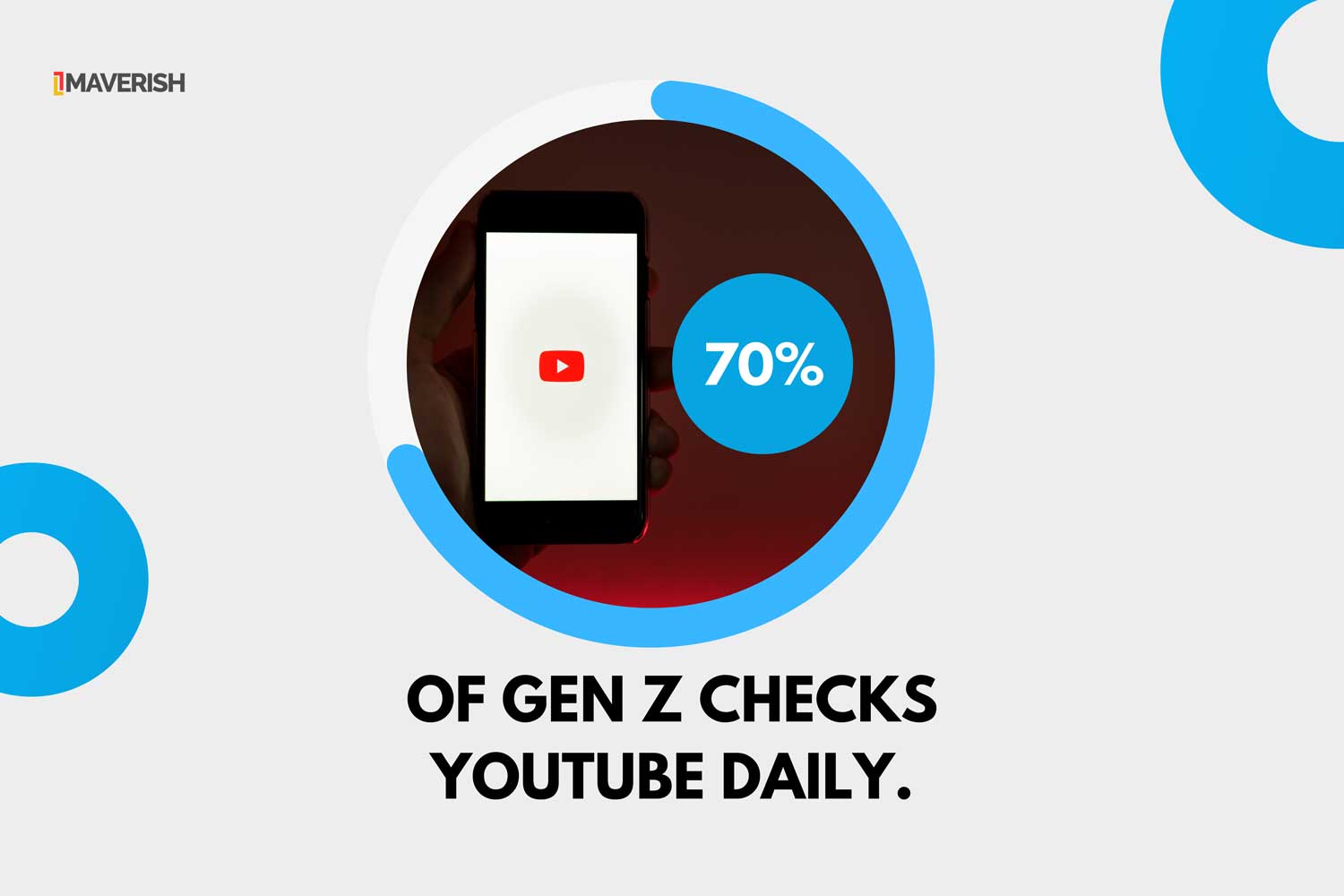
YouTube has solidified its position as a daily staple for Gen Z, with 70% checking the platform at least once a day. This is a significant increase from 62% in previous years, demonstrating YouTube’s growing importance in Gen Z’s daily media consumption.
YouTube has evolved into a multi-purpose platform for Gen Z like entertainment hub for favorite shows and music videos, educational resource for tutorials and how-to content and news source for updates on interests and current events.
This diverse usage presents opportunities for marketers to create various types of content that can inform, entertain, and engage Gen Z audiences on YouTube.
20. TikTok Becomes Gen Z’s Favorite Platform with 75% Daily Usage
In a significant shift, TikTok has overtaken Instagram as Gen Z’s most-loved social media platform in 2024. The current usage statistics show:
- TikTok: 75% daily usage.
- Instagram: 70% daily usage.
- Snapchat: 55% daily usage.
TikTok’s popularity can be attributed to its short-form video format, algorithm-driven content discovery, and creative tools that align perfectly with Gen Z’s preference for quick, engaging content. For brands, this means considering TikTok as a primary platform for reaching Gen Z audiences and adapting their content strategy to fit TikTok’s unique format.
21. Facebook Usage Among Gen Z Drops to 25% Daily Users

Facebook’s popularity with Gen Z continues to decline, with only a quarter of Gen Z users logging in daily in 2024. This is a significant drop from 34% in previous years. The decline can be attributed to:
- Preference for more visual and interactive platforms.
- Perception of Facebook as a platform for older generations.
- Concerns about privacy and data usage.
Despite this decline, Facebook remains relevant for reaching Gen Z through targeted advertising and community groups. Brands should consider using Facebook as part of a broader social media strategy, rather than as a primary platform for engaging Gen Z.
22. 85% of Gen Z Favors Socially Responsible Brands on Social Media
In 2024, 85% of Gen Z reports feeling more positive towards brands that promote social causes on social media, an increase from 77% previously.
Key issues resonating with Gen Z include gender equality, environmental sustainability, and racial equity. For brands, authentically engaging with these issues is crucial for gaining Gen Z’s trust and loyalty.
23. 70% of Gen Z Prefers Direct Communication with Businesses via Social Media
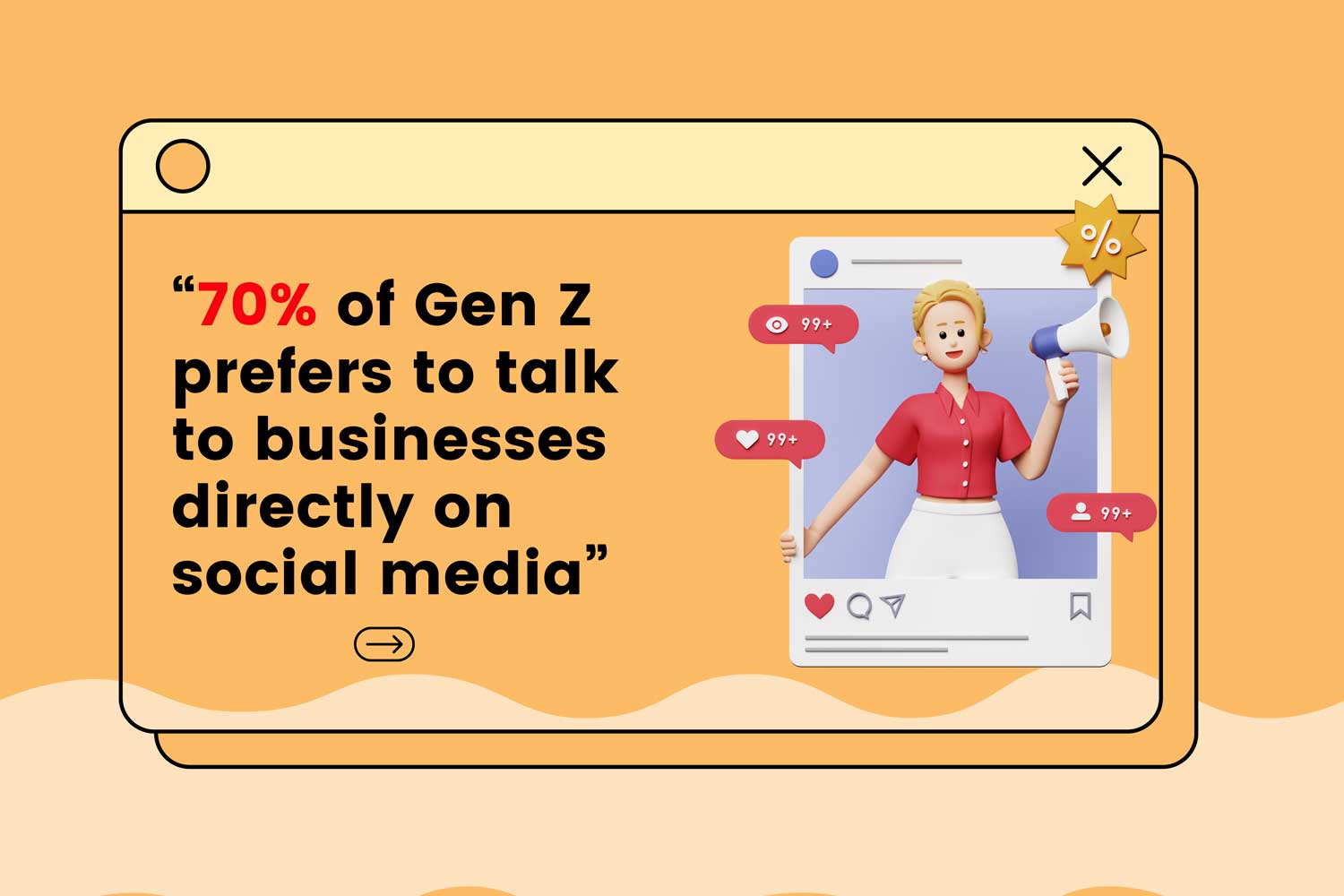
The desire for direct communication with businesses through social media has grown significantly among Gen Z. Now, 70% want to interact with companies through social media messaging, up from 60% previously.
This trend is driven by expectations for quick, personalized responses and a preference for casual, conversational interactions.
24. 90% of Gen Z Considers Social Media Essential in the Workplace
The importance of social media in professional settings has increased dramatically, with 90% of Gen Z now considering it a valuable workplace tool, up from 82%.
This shift reflects the growing use of social platforms for professional networking, increased reliance on social media for industry news and trends, and the adoption of social tools for internal communication and collaboration.
Need-to-Know Differences About Generation Z vs Millennials
25. Gen Z’s Attention Span Evolves: From 8 Seconds to Selective Focus

The outdated notion that Gen Z has an 8-second attention span compared to Millennials’ 12 seconds has been debunked. Recent studies reveal that Gen Z has developed “selective attention” rather than a shorter attention span.
This means they can quickly filter information, focusing on what they find relevant. When content interests them, they engage deeply, often for extended periods.
For marketers, this shift in understanding has important implications. Creating eye-catching, relevant content in the first few seconds is crucial to capture Gen Z’s attention.
Using multi-format content that combines text, images, and video can help maintain their interest. Personalized, targeted messaging is more effective than broad, generic content, as it’s more likely to be deemed relevant by Gen Z’s selective attention.
26. 75% of Gen Z Regularly Makes Purchases Through Mobile Devices
Mobile shopping has become the dominant trend among Gen Z, with 75% now making purchases through mobile devices regularly, a significant increase from 53% in previous years. In comparison, only 55% of Millennials prefer mobile shopping. This shift reflects Gen Z’s comfort with mobile technology and their strong preference for convenience.
Retailers are adapting to this trend by optimizing their websites and apps for mobile use. Many are implementing one-click purchasing options and digital wallets to streamline the buying process. Some are even offering mobile-exclusive deals and experiences to cater to this mobile-first generation.
27. 75% of Gen Z Prioritizes Financial Stability Over Fame
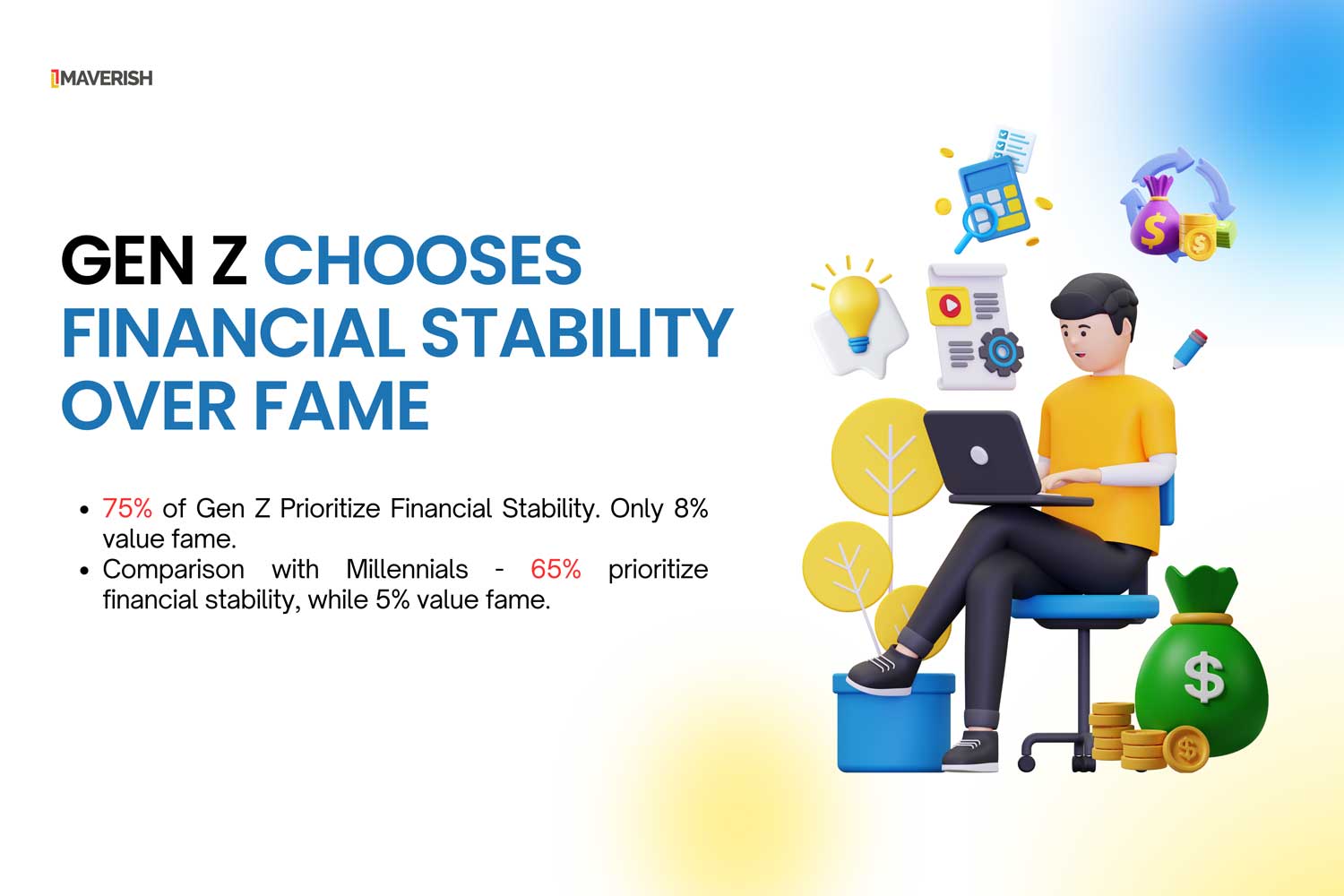
Gen Z’s attitudes towards money and fame have shifted, reflecting a more pragmatic approach to life and career. Now, 75% of Gen Z prioritize financial stability, up from 70% in previous studies. Only 8% of Gen Z consider fame important, down from 12%. This contrasts with Millennials, where 65% prioritize financial stability and 5% value fame.
This shift indicates Gen Z’s growing awareness of economic challenges and their practical approach to career and life planning. They’ve witnessed economic uncertainties and are responding by prioritizing financial security.
28. 62% of Gen Z are Enrolled in or Have Completed College
The trend towards higher education continues to grow among Gen Z, with 62% now enrolled in or having completed college, up from 59%. This compares to 55% of Millennials who have pursued higher education. Additionally, high school dropout rates for Gen Z have decreased to 4%, while Millennial dropout rates remain at 12%.
This increase in educational pursuit reflects Gen Z’s understanding of the competitive job market and their desire for career stability. They see higher education as a pathway to better job prospects and financial security.
29. 20% of Gen Z Cites Education Costs as a Major Concern
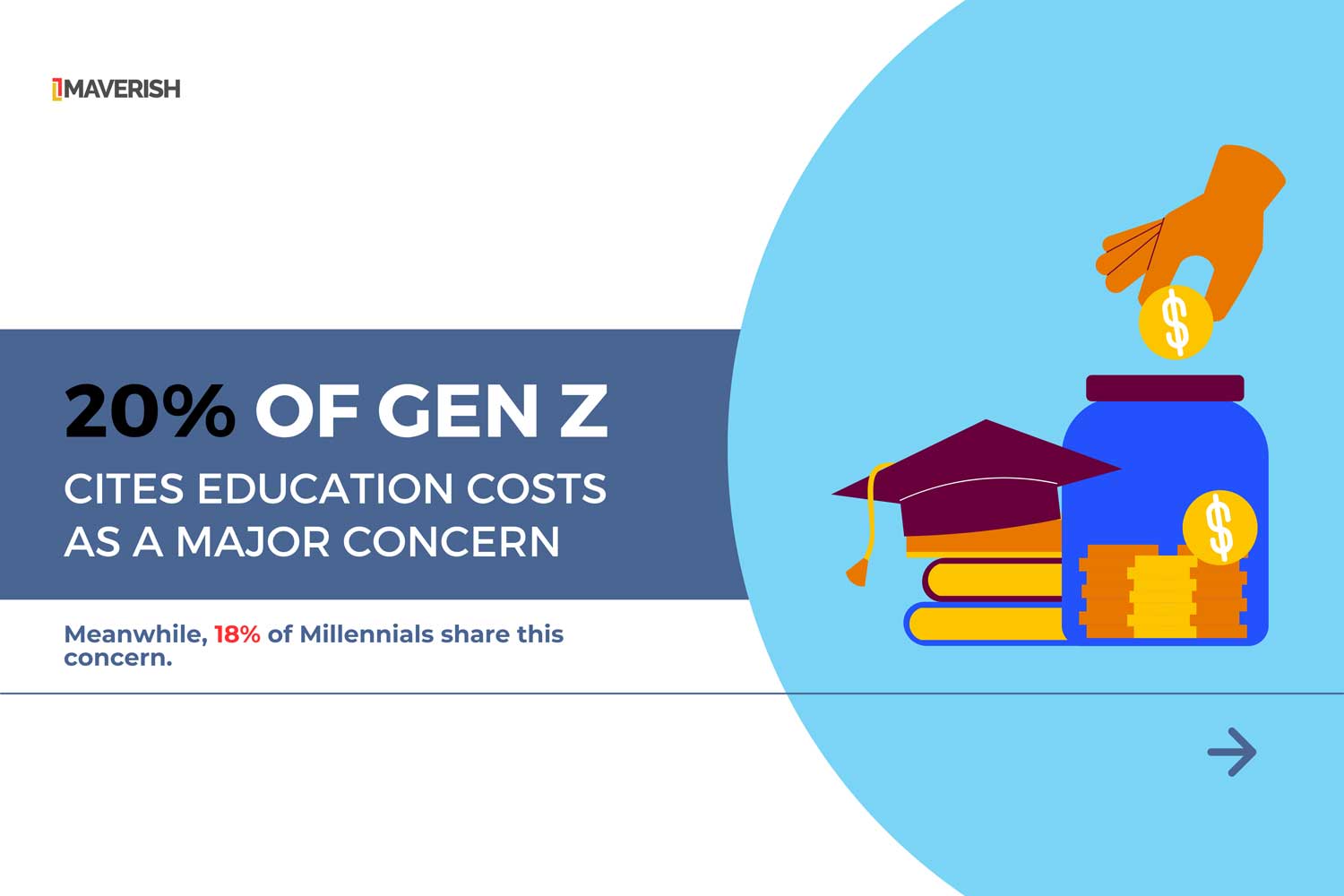
Education costs remain a significant worry for both Gen Z and Millennials, but the concern has intensified for the younger generation. Now, 20% of Gen Z cite education costs as a major concern, up from 16%. Meanwhile, 18% of Millennials share this concern, a slight increase.
This growing worry is influenced by rising tuition costs, increased awareness of student debt issues, and economic uncertainties in the job market.
Both generations are responding to these challenges by seeking alternative education paths, such as online courses and vocational training. They’re also prioritizing scholarships and financial aid and carefully considering the return on investment of different degree programs.
Conclusion
Generation Z is rapidly becoming a dominant force in the global economy and workforce, representing 28% of the world’s population and wielding $360 billion in buying power in the US alone.
Their unique characteristics as digital natives, coupled with their strong values around diversity, social responsibility, and work-life balance, are reshaping consumer markets and workplace dynamics.
To effectively engage with Gen Z, businesses must adapt their strategies. This includes embracing video-centric content (with 75% of Gen Z spending 3+ hours daily on video content), prioritizing mobile-first approaches (as 75% make purchases via mobile devices), and demonstrating commitment to social and environmental causes (important to 62% of Gen Z).
In the workplace, employers should focus on offering flexible work arrangements, cutting-edge technology, and diverse, inclusive environments to attract and retain Gen Z talent.
A common misconception is that Gen Z has a shorter attention span than previous generations. In reality, they’ve developed “selective attention”, quickly filtering information to focus on what’s relevant.
This skill, combined with their tech-savviness (with 82% willing to be tech mentors at work) and desire for authentic engagement, positions Gen Z as a powerful force for innovation and change.
As we move further into the 2020s, understanding and adapting to Gen Z’s preferences and values will be crucial for businesses, educators, and policymakers alike.
By embracing their digital fluency, commitment to social causes, and desire for work-life balance, organizations can harness the full potential of this dynamic generation, driving progress and innovation across all sectors of society.
Sources: Issuu, Business Insider, 99designs, Mccrindle, Dell, Forbes, Ypulse, HireRight, Pew Research Center, GlobalWebIndex, Criteo, ThinkWithGoogle, NRF, IBM, Yello, PR Newswire, Dell, Business Insider, Facebook, Iab UK, Statista, Signal Vine, Career Enlightenment, Beresford Research, Forbes, NY Post, Extreme Reach